Why Mold Removal Should Not Be a DIY Project
Finding mold inside a home or commercial property can be concerning. Many property owners attempt to clean visible mold with household products, but surface cleaning may not address hidden growth or the moisture problem that allowed it to develop.
Professional mold mitigation focuses on both the affected materials and the source of moisture.
What Causes Mold to Grow Indoors?
Mold spores are naturally present in indoor and outdoor environments. Mold may begin growing indoors when moisture remains on drywall, wood, insulation, flooring, cabinets, fabrics, or other suitable materials.
Common causes of indoor mold growth include:
- Plumbing leaks
- Roof and window leaks
- Flooding and water damage
- Air-conditioning problems
- High indoor humidity
- Condensation
- Poor ventilation
- Incomplete drying after a water emergency
Why Surface Cleaning May Not Be Enough
Visible mold may only be one part of the problem. Growth can also occur behind walls, beneath flooring, above ceilings, inside cabinets, and around HVAC systems.
Porous materials such as drywall, insulation, carpet padding, and ceiling tiles may hold moisture and contamination below the surface.
Cleaning the visible area without correcting the moisture source may allow the mold to return.
DIY Cleaning Can Disturb Mold Spores
Scrubbing, brushing, sanding, or removing affected materials without proper containment may release dust and spores into nearby rooms.
Professional mold mitigation may involve isolating the work area and using controlled procedures to help limit the movement of debris.
Bleach Is Not a Complete Mold Solution
Bleach may reduce surface staining on some non-porous materials, but it does not solve every mold problem.
It may not reach growth inside porous building materials, and it does not repair the leak, condensation, or humidity problem that caused the growth.
What Does Professional Mold Mitigation Include?
The exact process depends on the size and condition of the affected area. Professional mold mitigation may include:
- Visual inspection and moisture assessment
- Identification of the moisture source
- Containment of the affected area
- Removal of damaged porous materials
- Cleaning of suitable remaining surfaces
- Air filtration when appropriate
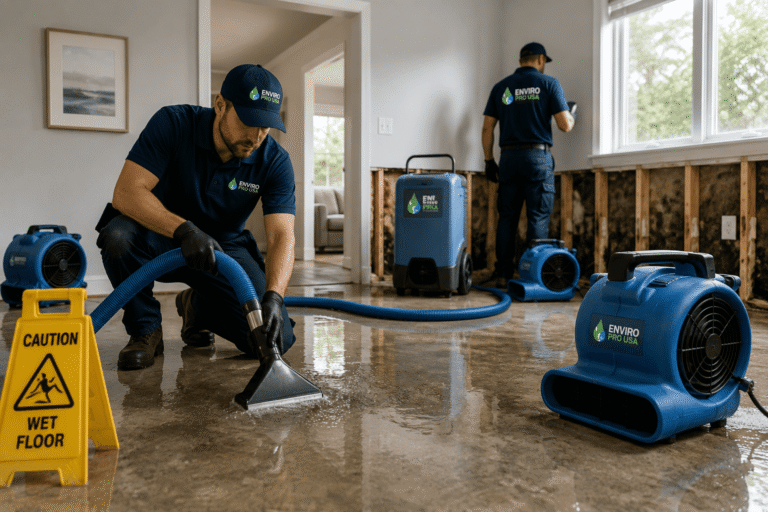
- Drying and dehumidification
- Repair or restoration of affected areas
Common Signs of a Mold Problem
Contact a professional if you notice:
- Musty or earthy odors
- Visible spotting or discoloration
- Peeling paint or bubbling drywall
- Damp walls, ceilings, or flooring
- Persistent condensation
- Recent flooding or water damage
- Mold that returns after cleaning
How to Help Prevent Mold Growth
Property owners can reduce the risk of mold by controlling moisture and responding quickly to water damage.
- Repair plumbing and roof leaks promptly
- Dry water-damaged materials as quickly as possible
- Use exhaust fans in bathrooms and kitchens
- Maintain air-conditioning and drainage systems
- Control indoor humidity
- Inspect areas around windows, appliances, and plumbing fixtures
Mold Removal for Homes, Businesses, and Condominiums
Mold problems can affect many types of properties. EnviroPro USA provides specialized services for:
Contact EnviroPro USA
EnviroPro USA provides professional
mold removal and mitigation
services.
Our team helps identify moisture conditions, contain affected areas, remove damaged materials, clean suitable surfaces, and prepare the property for restoration.
Call
(888) 555-2477
or
request a mold inspection
.